I want to share the story and the text I’ve just posted on my Instagram. The thought started when I was looking through one of the analog photos I shot this summer.
The question is: when was the last time you “failed” to take a picture? And by failing, I mean wrong exposure, misfocus, a shaky hand, and so on.
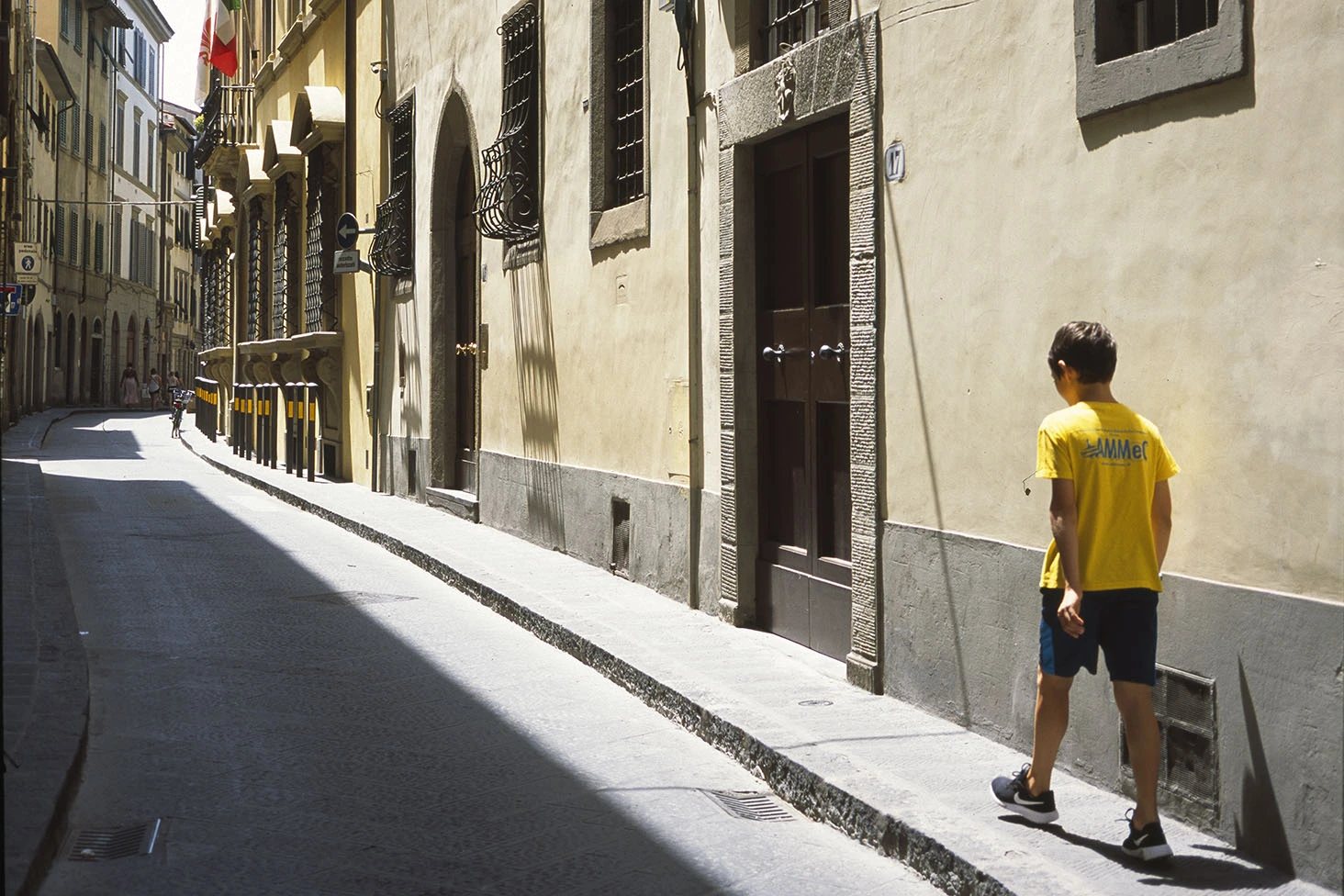
Florence, Street Life Series, 2018 — shot with a Fujifilm GA645i on Fujifilm Velvia 100F film.
I’m talking about this because now we’re all used to camera phones that basically do it all by themselves.
The complex algorithms can judge perfect exposure, balancing highlights and shadows; super-fast, precise focus lets you get all your photos just perfect without thinking (at least on the technical side).
As I mentioned in some previous posts (and will soon cover on this blog), this summer I was going back to shoot some analog film. I bought a second-hand medium format camera, the Fujifilm GA645i, and shot some rolls of Fujifilm Velvia and Kodak Ektar 100.
With analog, you have to think twice — if not three times. You can’t see the final picture you shot. Shooting film is expensive because it includes the cost of the film, developing, scanning, and the time it takes to correct and edit the pictures.
This is something I think we definitely lost with digital and especially with smartphone photography.
Don’t get me wrong. You know I’m quite excited about smartphone photography, since we can carry a great camera in our pocket every day. But at the same time, we have lost the preciousness of the moment in photography — the “work” of getting the photo and the surprise when you see it come back to you from the lab.
For instance, with this photo I published here and others on the roll, I got the “surprise” of noticing that some frames had a light leak. This was totally my fault since I hadn’t wrapped the 120 film paper properly (yes, the medium-format film “container” is different from the one on 35mm), so the film got this extra, unintentional exposure.
I think this is the beauty and the bad thing about the unexpected that can happen in the world of analog photography.
Let me know what you think, and if you have any experience to share about analog photography.



Leave a Reply